

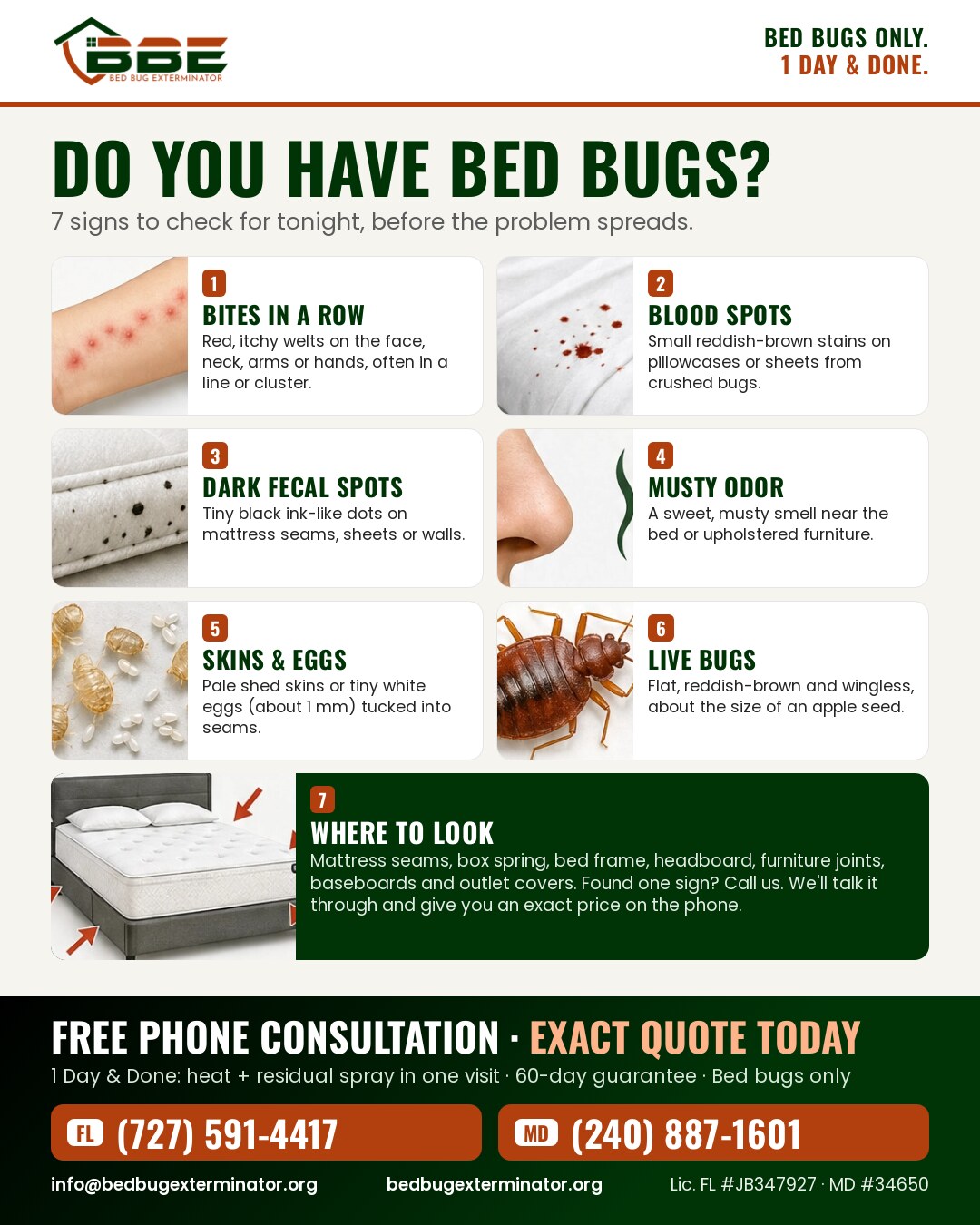
Most people go looking for the early signs of bed bugs the morning after they wake up with bites. Bites are the least reliable clue on this list. The signs that settle the question are in the seams of your mattress: rusty spots, black specks, pale shed skins and tiny white eggs. A flashlight at the bed will tell you more than any photo of your arm.
The signs, and how much each one proves
One weak sign on its own is not a reason to panic. Two strong signs in the same seam, or one live bug, is an infestation until proven otherwise.
-
Bites in a row
Weak sign
Red, itchy welts on the face, neck, arms or hands, often in a line or a cluster. The EPA calls bites a poor indicator: they look like mosquito or chigger bites, rashes or hives, and some people never react at all.
-
Blood spots
Moderate sign
Small rusty or reddish-brown stains on pillowcases and sheets, left when a bug that has just fed gets crushed as you roll over. A scratched bite can leave the same mark, so look for the next sign beside it.
-
Dark fecal spots
Strong sign
Tiny black dots on mattress seams, sheets or the wall behind the headboard. This is digested blood, and on fabric it bleeds in slightly the way a marker does. Clusters of these in a seam are one of the clearest signs there is.
-
Musty odor
Weak sign
A sweet, musty smell near the bed or upholstered furniture. University of Kentucky entomologists say it is seldom noticeable except in extreme infestations, so never use your nose to rule bed bugs out.
-
Skins and eggs
Strong sign
Pale, papery shed skins and white eggs about 1 mm long, tucked into seams and crevices. Young bed bugs shed five times on the way to adulthood, so a group that has settled in leaves plenty of skins behind. One egg is hard to spot; look for clusters.
-
Live bugs
Confirms it
Flat, reddish-brown, wingless and about the size of an apple seed. Young ones are smaller and paler, close to see-through before they feed. If you catch one, keep it. Our photo identification guide shows every life stage.
7. Where to look tonight
Bed bugs stay close to where someone sleeps. Strip the bed, take a flashlight, and look into the seams and cracks rather than across flat surfaces. Work through these in order:
- Mattress seams, piping, tags and corners, on both sides. This is where most signs on sheets start.
- The box spring, including under the thin fabric cover on the bottom.
- Bed frame joints and the headboard, front and back, and any screw holes.
- Furniture next to the bed: nightstand drawers and joints, chair and couch seams, between cushions.
- Baseboards and outlet covers near the bed.
For a slower, room-by-room version, follow our guide to checking your home for bed bugs.
Bites but no other signs of bed bugs?
Then you do not have enough to go on yet, in either direction. Mosquitoes, chiggers and fleas leave similar bites, and rashes and hives can look the same, so bites cannot confirm bed bugs or rule them out. An early infestation is small, too: a few bugs leave a few specks.
Check the seams again in a few days, and compare your marks with our page on what bed bug bites look like. If the bites keep coming and the bed stays clean, check the couch or recliner where you fall asleep.
Found a sign? What to do next
- Keep the evidence. Trap a bug in a small container that closes tightly, without crushing it. Take a close photo from directly above with a coin beside it for scale.
- Do not spray or set off a bug bomb. Foggers do not reach into the seams and cracks where bed bugs hide. Here is why bug bombs fail.
- Do not move to the couch. The EPA says bed bugs will travel 5 to 20 feet from their hiding places to feed, so sleeping in another room tends to give them a second one.
- Call us. The phone consultation is free, and you get an exact quote on the same call. If you would rather have it confirmed in person first, our inspection costs $200 and is credited toward treatment.
Heat Treatment and Residual Spray in one visit, with a 60-day guarantee. Bed bugs are all we treat.
Share this infographic
You are welcome to use it on your website, in a newsletter or on a building notice board. Copy the code below; it includes a credit link back to this page.