

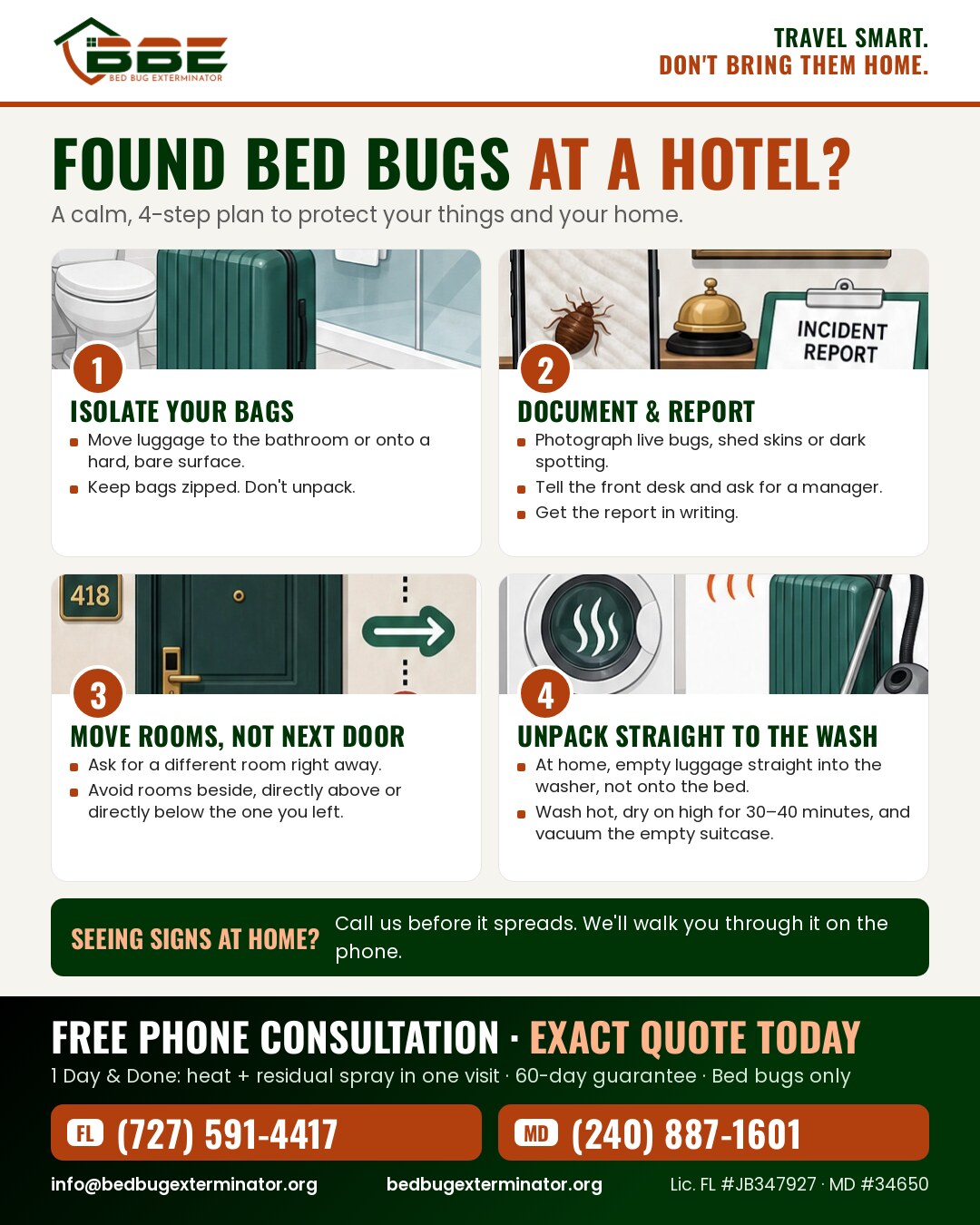
Bed bugs are hitchhikers. They travel on luggage, clothing and belongings, which makes hotels, where guests change every night, an easy place to pick them up. Finding them in your room is unpleasant, but it is the best time to find them: before they ride home with you.
The 4 steps
-
Isolate your bags
Move your luggage to the bathroom or onto a hard, bare surface, away from the bed and upholstered chairs. Keep the bags zipped, and do not unpack.
-
Document and report
Photograph live bugs, shed skins or dark spotting, close up and with something for scale. Tell the front desk, ask for a manager, and get the report in writing.
-
Move rooms, not next door
Ask for a different room right away, and avoid the rooms beside, directly above or directly below the one you left. Bed bugs spread to neighboring units through walls and gaps.
-
Unpack straight to the wash
At home, empty your luggage straight into the washer, not onto the bed. Wash hot, dry on high for 30 to 40 minutes, and vacuum the empty suitcase.
How to check a hotel room for bed bugs
Do it before you unpack, and it takes a few minutes:
- Keep your suitcase on the luggage rack, not the bed, while you look.
- Pull back the sheets at the corners and check the mattress seams and tags for small dark spots, pale shed skins or rusty stains.
- Check the headboard, especially where it meets the wall and the mattress.
- Look at the seams of the chair or sofa if the room has one.
Our early signs of bed bugs infographic shows what each sign looks like.
Think some came home with you?
Keep an eye on the bed for the next few weeks. Check the mattress seams and headboard, and do not move to the couch if you see something; sleeping elsewhere tends to spread bed bugs to a second room.
If you run a hotel or rental, our hotel and motel bed bug service covers discreet treatment between guests.
Seeing signs at home? Call us before it spreads. The phone consultation is free, and you get an exact quote on the same call.
Share this infographic
You are welcome to use it on your website, in a newsletter or on a notice board. Copy the code below; it includes a credit link back to this page.