

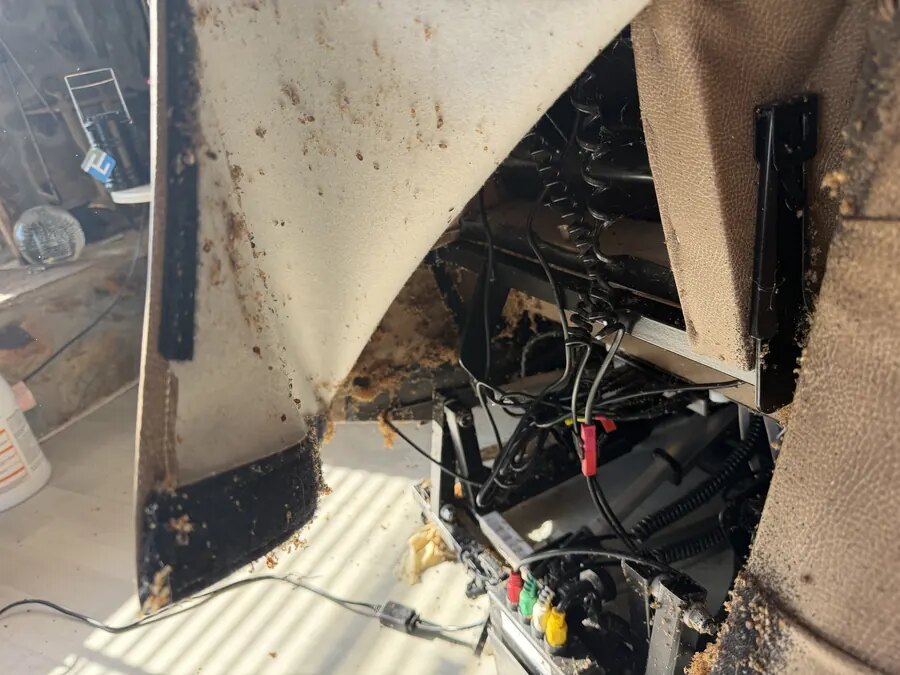
A free couch from the curb or a cheap dresser from an online listing can be a good deal. It can also be how bed bugs arrive. University of Kentucky entomologists list second-hand beds and furniture as one of the ways bed bugs get into homes, alongside luggage and clothing. There is no need to stop buying used furniture. Check it before it comes through the door, because once it is inside the bugs can move to your bed.
Where bed bugs hide in furniture
Bed bugs like wood and fabric more than metal or plastic, and they pack into any crack about as wide as a credit card. On each type of piece, look here:
- Couches and recliners: seams, piping, the skirt, the folds of fabric, between and under cushions, and the underside, including the recliner mechanism. A couch someone sleeps on is as risky as a bed.
- Bed frames and headboards: joints, screw holes, slats where they rest on the frame, and the back of the headboard.
- Dressers and nightstands: drawer corners and joints, drawer runners, and the back panel where it meets the frame. Pull every drawer right out.
- Mattresses and box springs: seams, tags and the fabric on the bottom of the box spring.
How to check used furniture for bed bugs
Do it outside, in the garage or on the driveway, before the piece comes into the house. It takes about five minutes with a bright flashlight and a card or putty knife to run along the seams.
- Look for small dark spots along seams, in joints and around screw holes. These are bed bug droppings, and on fabric they bleed in a little like marker ink.
- Look for pale, papery shed skins and tiny white eggs about 1 mm long, tucked into cracks.
- Look for live bugs: flat, reddish-brown and about the size of an apple seed. Young ones are smaller and pale.
- Turn the piece over. The underside of couches, chairs and box springs is where people forget to look.
Our early signs of bed bugs infographic shows what each sign looks like up close.
Is it worth bringing home?
Hard furniture is easier to check than soft. A wooden or metal piece with no fabric can be inspected joint by joint. An upholstered couch or a mattress has places you cannot see into without taking it apart, so a clean-looking surface proves less. The University of Kentucky advice is to leave discarded mattresses and sofas alone altogether.
For smaller things that came with the furniture, such as cushion covers, throws or clothing, a clothes dryer on medium to high heat for 10 to 20 minutes kills every bed bug life stage, according to the same university guide.
Already brought it inside?
Check it now, the same way, and check your own bed over the next few weeks. Do not set off a bug bomb or spray the piece; it scatters bed bugs into the walls and other rooms. Here is why bug bombs fail.
If you find signs, our heat treatment brings every room, and the furniture in it, to 140 to 145°F, which reaches inside cushions and frame joints where sprays cannot. A residual spray follows the same day.
Heat Treatment and Residual Spray in one visit, with a 60-day guarantee. The phone consultation is free, and you get an exact quote on the same call.